 woodspick.

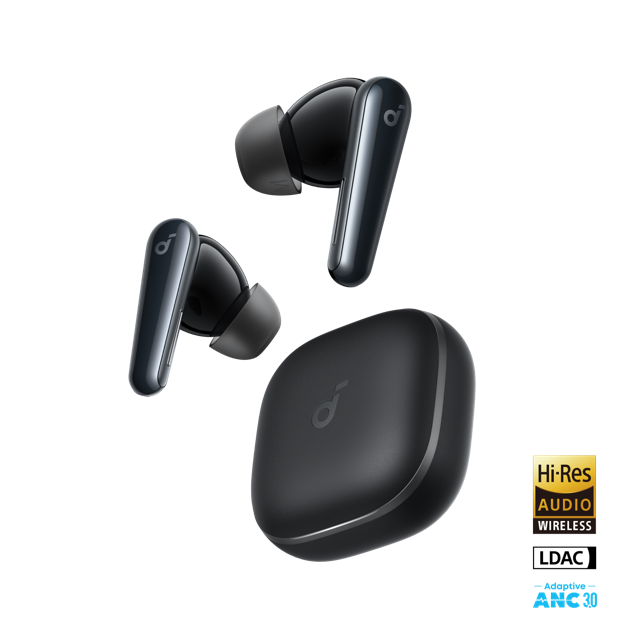
Upgrade for a specific problem
Sony is worth investigating when isolation or calls are an unmet need and its larger shell fits. Liberty 5 already offers ANC, app controls and two-device connections, so a satisfied owner should keep those strengths in the price comparison. Judge battery life in the modes you will actually use, rather than comparing the longest case-inclusive totals.
Begin with the reason for replacing your earbuds
The Sony WF-1000XM6 and soundcore Liberty 5 cover several of the same everyday needs: sealed in-ear listening, noise-control modes, app settings and a phone-and-laptop routine. Upgrading therefore needs a better reason than discovering that the Sony also has ANC or two-device connections.
Write down the one problem you want to fix. Is outside noise interrupting the commute? Are callers struggling to hear you? Do the earbuds become uncomfortable? Or are you simply attracted to a newer flagship? The first three give you a scenario to compare; the last does not yet establish a useful purchase.
The documented differences
| Detail | Sony WF-1000XM6 | soundcore Liberty 5 |
|---|---|---|
| Bluetooth source connections | Multipoint for two devices | Dual Connections for two devices |
| ANC playback, manufacturer rating | Up to 8h with AAC/SBC; 5h with LDAC; 7h with LC3 | Up to 8h; advanced modes change runtime |
| Longer playback claim | Up to 12h with AAC/SBC and noise-control modes inactive | Up to 12h Normal mode |
| Case-inclusive headline | Up to 24h, per US product page | Up to 32h with ANC; 48h Normal mode |
| High-quality Bluetooth route | LDAC on a compatible source; LC3 through compatible LE Audio | LDAC on a compatible Android source |
| Advanced dual-device battery note | Use Sony's codec/mode table; do not assume 8h for LDAC | Official FAQ lists about 4h for Dual Connections with LDAC / Dolby combinations |
| Earbud protection | IPX4 | IP55, earbuds only |
These are manufacturer specifications under their respective conditions, not one shared battery test. The case-inclusive totals include recharging breaks and should not be read as continuous playback.
Where Sony has a stronger reason to enter the shortlist
RTINGS highlights Sony's isolation and microphone noise handling. SoundGuys also finds strengths in ANC, sound and the microphone, while noting the premium price. That evidence is relevant if unwanted noise or calls are the reason you are shopping.
It does not give a guaranteed size of improvement over your own Liberty 5 setup. A poor seal, the wrong microphone selected on a laptop, or a particular app's behavior may contribute to the problem. Fix those basics before paying to replace them.
Sony also deserves a fitting check: RTINGS warns that the bulkier shells can be difficult for small ears. A stronger isolation result is little consolation if the earbud will not stay seated during the journey where you need it.
Where keeping Liberty 5 makes sense
If Liberty 5 fits securely, handles the commute and switches between your devices satisfactorily, keeping it preserves both money and a setup you already understand. Its app features and compatibility are not erased by the arrival of a more expensive competitor.
Its protection rating is also different: IP55 includes a dust-resistance classification, while Sony's IPX4 does not state one. Neither rating extends the idea of protection to every liquid exposure or makes the charging case suitable for immersion. Choose around normal use rather than treating either number as a general durability score.
The actual checkout-price gap matters more than a historical launch-price comparison. Check the same market, the exact model and what is included. If the gap is large, ask what specific improvement is worth that amount to you. If it is small, fit and the preferred controls may become more important.
Choose settings before choosing a battery winner
A long journey makes the mode-specific details important. Sony's eight-hour ANC figure applies to AAC/SBC; LDAC reduces the stated ceiling to five hours. Liberty 5's longer ratings likewise should not be combined with every advanced feature: current support permits LDAC / Dolby combinations with dual connections, but lists about four hours for that configuration.
An iPhone does not supply LDAC through its normal Bluetooth connection, so codec shopping alone is a poor reason for an iPhone owner to upgrade. For either brand, verify the source device, current app settings and switching behavior with the actual laptop or phone you will use.
The decision
Choose Sony when isolation or calls are an important unmet need, the shell fits, and the current price difference is acceptable. Keep Liberty 5 when it already performs the job and the upgrade would mainly add a flagship name. Read the Sony review and Liberty 5 review for the individual tradeoffs, then compare the selected Sony and soundcore listings.
Sources
Model information checked November 1, 2026. Manufacturer specifications and each publisher’s findings are identified in the text. Their test conditions and methods can differ.
- Sony US: WF-1000XM6 product details and Multipoint FAQ
- Sony Help Guide: codec-specific operating time
- Sony Help Guide: Classic Audio and LE Audio codecs
- RTINGS: Sony WF-1000XM6 independent review
- SoundGuys: Sony WF-1000XM6 independent review
- soundcore Liberty 5: official US product page
- soundcore Liberty 5 support FAQ: battery modes, setup and fit
- soundcore: Dual Connections with LDAC or Dolby Sound
- soundcore: enabling Dolby Sound
- Anker: A3957 codec compatibility and earbud-only IP55 scope